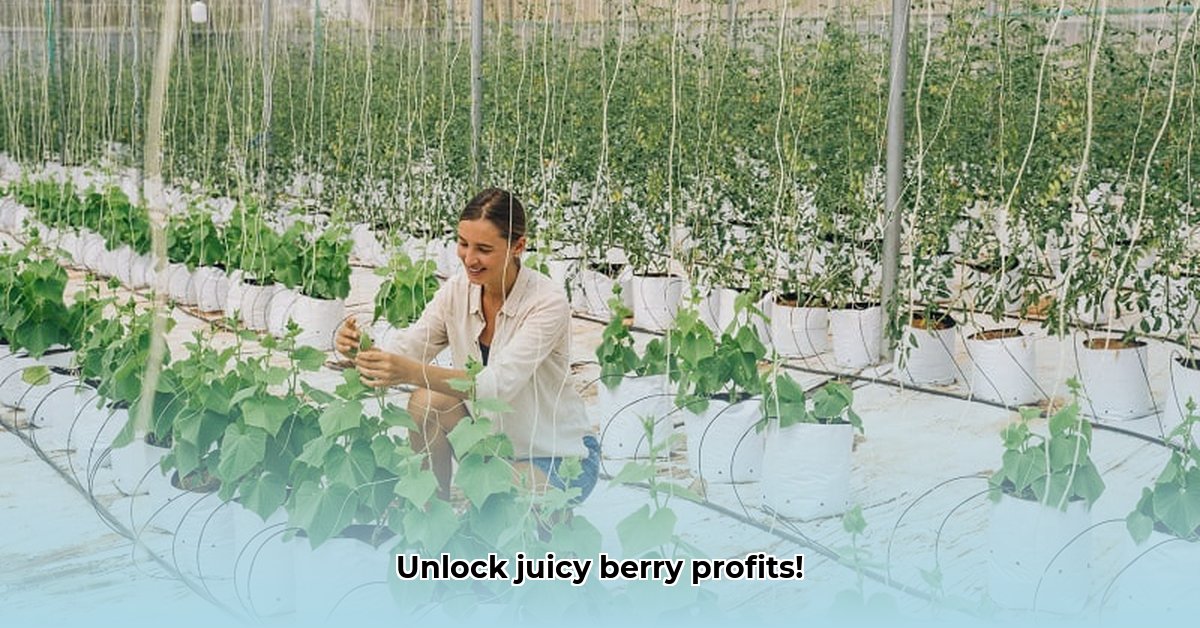
Growing organic berries is a rewarding yet challenging endeavor, demanding careful planning and a deep understanding of seasonal nuances. This guide provides actionable steps for maximizing yields while upholding organic principles. We'll explore soil health, pest management, and seasonal strategies to help you cultivate a thriving, profitable berry farm. For more berry growing tips, check out this helpful resource: Berry Growing Guide.
Soil Health: The Foundation of Your Berry Patch
Before planting, a soil test is paramount. It reveals the pH level (acidity/alkalinity) and nutrient content, guiding your soil amendment strategy. Compost significantly improves soil structure, enabling better root growth and drainage, while boosting nutrient availability. Healthy soil is the cornerstone of healthy plants and bountiful harvests. Do you know the specific nutrient needs of your chosen berry varieties? A deficiency in even one key nutrient can drastically reduce yield.
Battling Pests and Diseases Organically: A Preventative Approach
Organic pest and disease management hinges on vigilance and prevention. Regular plant inspections are crucial, allowing for early intervention. Integrated Pest Management (IPM), which utilizes beneficial insects and organic pesticides only when necessary, is vital for sustainable control. Knowing your area's common pests is crucial for effective preparedness. What percentage of your potential yield is lost annually to pests and diseases? Implementing IPM strategies can significantly reduce this figure.
Choosing the Right Berries: Finding the Perfect Fit
Selecting the right berry varieties is critical for success. Consider your local climate, soil type, and target market when making your choices. Planting diverse varieties mitigates risks; if one variety suffers, your entire harvest isn't compromised. Local farmers and nurseries offer invaluable insights. What is the market demand for different berry varieties in your region? Tailoring your choices to consumer preferences ensures higher profitability.
Watering Wisely and Mulching Magnificently: Optimizing Water Use
Efficient irrigation, such as drip irrigation or soaker hoses, directly delivers water to roots, minimizing waste. Mulching (applying organic matter like straw or wood chips) retains soil moisture, suppresses weeds, and regulates soil temperature. How much water do you currently use per hectare, and what percentage is lost through evaporation or runoff? Efficient irrigation coupled with mulching can significantly reduce water consumption and improve water use efficiency.
Sun Protection: Shielding Your Berries from Scorching Rays
Shade cloth protects berries from sunburn, especially delicate varieties. This simple measure can significantly boost yields. Have you observed any sunburn damage in previous seasons? If so, implementing sun protection strategies is essential for increased yield.
Harvest Time: Maximizing Quality and Profitability
Harvest berries at peak ripeness for optimal flavor and quality. Consider "pick-your-own" options – reducing labor costs while engaging customers. Handle berries gently to avoid bruising. What is your average labor cost per kilogram of harvested berries? Streamlining harvest techniques, including strategies like pick-your-own, can dramatically lower labor costs.
Value-Added Products: Expanding Your Market Reach
Transform your harvest into value-added products, such as jams or frozen berries. This extends the season, increases profitability, and broadens market opportunities. "Dr. Evelyn Reed, Extension Specialist in Horticulture at the University of California, Davis" notes that "Value-added products can command significantly higher prices, enhancing farm profitability."
A Seasonal Timeline for Organic Berry Success
| Season | Key Tasks | Important Considerations |
|---|---|---|
| Spring | Soil preparation, planting, pest monitoring | Ensure well-drained, rich soil. |
| Summer | Efficient watering, pest/disease management, mulching | Address issues promptly. |
| Autumn | Harvesting, winter soil preparation | Protect plants from frost; clean up fallen leaves. |
| Winter | Pruning, planning for the next season | Plan crop rotation and variety selection for optimized yield. |
Navigating the Risks: Challenges and Solutions
Organic berry farming presents challenges, but proactive measures mitigate many risks:
| Potential Problem | Solutions |
|---|---|
| Diseases (e.g., root rot) | Disease-resistant varieties, improved drainage, crop rotation |
| Pests (birds, insects) | Netting, beneficial insects, organic pesticides (as needed) |
| Sunburn | Shade cloth, strategic planting locations |
| Market price fluctuations | Diversify products, explore diverse sales channels |
Mastering Phytophthora Root Rot: A Detailed Action Plan
Phytophthora root rot, caused by Phytophthora pathogens, is a significant threat. Effective management requires a multi-pronged approach:
- Cultivar Selection: Choose resistant varieties; this significantly reduces infection risk.
- Soil Drainage: Ensure well-drained soil to prevent waterlogging.
- Water Management: Use drip irrigation to minimize pathogen spread.
- Biocontrol: Utilize beneficial microbes to suppress Phytophthora.
- Soil Solarization: Employ this technique as a pre-planting treatment.
- Crop Rotation & Sanitation: Prevent pathogen build-up by rotating crops and removing infected debris.
- Monitoring & Adaptation: Regularly inspect plants and adjust your management strategies accordingly.
Organic berry farming demands dedication and adaptability. By implementing these strategies, you can cultivate a thriving, sustainable operation with abundant, high-quality yields.